

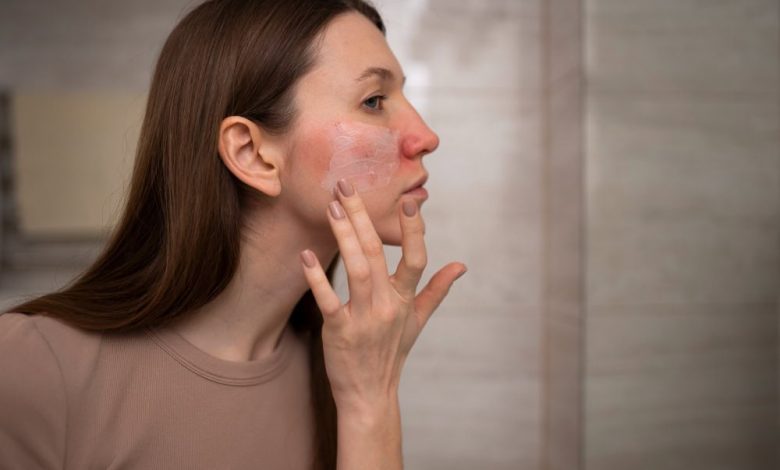
A sudden splash of pink across the cheeks is one of the most common cosmetic grievances. For some, it appears after an intense workout or a brisk walk in winter air, fading back to an even complexion within an hour. For others, that pink hue deepens into a stubborn, fiery crimson that sets up permanent residence across the nose, cheeks, and chin.
Because red skin is an outward manifestation of so many distinct physiological events, it is frequently misread. People routinely dismiss the early signs of a chronic skin disease as mere “sensitive skin,” while others panic over temporary barrier irritation, convinced they have developed a permanent condition.
Distinguishing between general facial redness and rosacea is not an exercise in semantic nitpicking. It is the critical dividing line between choosing a calming moisturizer that solves the problem and applying aggressive treatments that inadvertently set your face on fire.
The Mechanics of General Facial Redness
Everyday facial redness is primarily an acute, situational response rather than an intrinsic, chronic pathology. The human face has a remarkably dense network of superficial blood vessels located close to the surface of the skin. When these microvessels receive specific physical or neurological signals, they widen rapidly—a process known as vasodilation—allowing more blood to rush through the tissue.
This reaction can stem from several distinct mechanisms:
Emotional and Physiological Flushing
A sudden surge of adrenaline or autonomic nervous system arousal triggers rapid capillary dilation. Whether caused by acute embarrassment, physical exertion, a hot shower, or alcohol consumption, this vascular response is swift and uniform. Once the underlying stimulus recedes, the blood vessels contract back to their baseline diameter, and the skin returns to its resting hue.
Impaired Moisture Barrier
A compromised skin barrier is arguably the most common culprit behind modern facial redness. The outermost layer of the skin, the stratum corneum, relies on a balanced matrix of ceramides, fatty acids, and cholesterol to keep environmental irritants out and hydration in.
When people overuse chemical exfoliants, apply harsh cleansing agents, or expose their skin to low-humidity winter air, this protective barrier cracks microscopically. The result is transepidermal water loss coupled with acute irritation. The skin becomes reactive, pink, and tight, but the issue is structural and environmental rather than vascular at its core.
Contact Dermatitis
When the immune system identifies an ingredient in a serum, detergent, or fragrance as an allergen or irritant, it mounts an localized inflammatory response. Contact dermatitis often presents as a blotchy, itchy, or swollen red rash that matches the exact footprint of where the product was applied. Once the offending substance is removed and the skin is given time to recover, the redness resolves entirely.
What Actually Happens in Rosacea?
Rosacea is fundamentally different from a transient flush or dry-skin irritation. It is a chronic, progressive neurovascular and inflammatory disorder that involves an inherent dysfunction in both the skin’s vascular architecture and its innate immune system.
In a person with rosacea, the blood vessels in the central facial zone do not just dilate in response to normal triggers; they dilate excessively, frequently, and fail to constrict back to their normal resting state. Over time, the structural walls of these tiny vessels lose their tone and elasticity, remaining permanently enlarged.
Beneath the surface, the immune response is chronically dysregulated. Individuals with rosacea consistently show elevated levels of specific antimicrobial peptides known as cathelicidins, along with abnormal activity of processing enzymes called kallikrein 5. When these proteins are overproduced, they trigger an inflammatory cascade that prompts abnormal blood vessel growth (angiogenesis), tissue swelling, and cellular recruitment that mimics an active infection.
Compounding this immune sensitivity is the presence of microscopic Demodex folliculorum mites. While these organisms inhabit the hair follicles of almost every adult human as harmless commensals, people with rosacea often harbor them in significantly higher densities. The immune system reacts violently to the mites and their associated bacteria, fueling ongoing surface inflammation, stinging, and visible breakout-like lesions.
Clinical Subtypes and How They Present
Rosacea rarely looks the same on two different people. Dermatologists categorize the condition into four distinct presentations, though it is common for a person to experience overlapping symptoms from multiple categories simultaneously.
Erythematotelangiectatic Rosacea
Often abbreviated as ETR, this is the classic vascular subtype. It is characterized by persistent, fixed background redness across the central third of the face—the bridge of the nose, the central cheeks, the center of the forehead, and the chin.
Alongside the diffuse background flush, this subtype features visible telangiectasias, commonly referred to as broken capillaries or spider veins. These are not actually broken; they are permanently dilated, visible blood vessels that weave like fine red threads through the surface layers of the epidermis. People with ETR frequently report an intense, physical sensation of heat, burning, or stinging when exposed to minor temperature changes or plain tap water.
Papulopustular Rosacea
Often misidentified as adult acne, this inflammatory subtype pairs central facial redness with red bumps (papules) and pus-filled lesions (pustules).
However, there is a crucial clinical distinction: papulopustular rosacea does not produce comedones (blackheads and whiteheads). The bumps are not caused by clogged pores full of oxidized sebum and dead skin cells; they are discrete inflammatory lesions arising from follicular inflammation. Treating them with conventional, drying acne medications will almost always strip the skin barrier and cause the surrounding redness to flare aggressively.
Phymatous Rosacea
This rarer, progressive subtype involves marked skin thickening, nodular enlargement, and irregular surface texture. It most commonly affects the nose, a condition known as rhinophyma, causing it to appear bulbous, waxy, and visibly pitted with enlarged pores. Phymatous changes result from chronic, long-term lymphatic fluid accumulation and hyperactive sebaceous gland growth. It occurs far more frequently in men than in women.
Ocular Rosacea
Rosacea is not confined to the dermal surface; it frequently affects the eyes and eyelids. Symptoms include chronic bloodshot conjunctiva, watery or severely dry eyes, swollen eyelids (blepharitis), recurrent styes, and a persistent sensation of grit or sand under the lids. Crucially, ocular symptoms can precede cutaneous facial signs, leaving many people to treat chronic dry eye for years without realizing an underlying skin condition is the driver.
Key Differentiating Markers: Rosacea vs. Everyday Redness
When evaluating facial redness, examining specific behavioral and visual clues will quickly reveal whether you are dealing with transient irritation or a chronic vascular condition.
The Location Factor General redness can happen anywhere on the face, neck, or chest, often following where a product was applied or where sunburn occurred. Rosacea exhibits a strict anatomical preference: it centers almost exclusively on the central third of the face, forming a distinct butterfly pattern across the nose and cheeks. It generally spares the immediate skin around the eyes and the lower jawline.
Persistence Over Time Temporary flushing clears within minutes or hours once the room cools down, the wine is metabolized, or the heart rate settles. Barrier irritation subsides within days of stripping your skincare routine down to basic, bland hydration. Rosacea features a fixed background erythema that never fully disappears; even on quiet, calm days, a subtle pink or red tint remains visibly stamped across the central face.
Visible Vascular Threads General sensitive skin looks uniformly pink or splotchy. Rosacea typically features discrete, branching red and purple telangiectasias that can be seen clearly under natural light, particularly around the nasal creases and upper apples of the cheeks.
The Sensory Experience While dry or irritated skin feels uncomfortably tight, taut, or mildly itchy, rosacea carries a hallmark sensation of neurogenic stinging and burning. Sufferers often describe it as feeling like their face is radiating heat from within, or as if they have an active chemical peel sitting on their skin, even when nothing has been applied.
The Risks of Misdiagnosis and Counterproductive Treatments
Treating rosacea as if it were ordinary redness or acne can cause lasting dermatological damage. Because papulopustular rosacea visually mimics adolescent acne, many people instinctively reach for high-strength salicylic acid, benzoyl peroxide, aggressive physical scrubs, and drying clay masks.
In a rosacea patient, these ingredients destroy whatever intact lipid barrier remains, triggering a massive rebound release of inflammatory mediators and widening blood vessels further.
Similarly, mistaking persistent redness for simple eczema or contact dermatitis leads some to apply over-the-counter hydrocortisone creams. While topical corticosteroids initially provide rapid, deceptive relief by constricting blood vessels and suppressing local inflammation, using them on the face for more than a few days is notoriously dangerous.
Prolonged topical steroid use on rosacea-prone skin causes vascular dependency, dermal thinning, and devastating rebound flares known as steroid-induced rosacea, which are exceptionally difficult to resolve.
Targeted Management Strategies
Because their biological roots are entirely different, general redness and rosacea demand divergent approaches to care.
For general redness caused by lifestyle, sun exposure, or an over-exfoliated barrier:
-
Eliminate all active ingredients like retinoids, alpha-hydroxy acids, and vitamin C serums for at least two weeks.
-
Rebuild the intercellular matrix with barrier-restoring ingredients such as pure ceramides, squalane, colloidal oatmeal, and panthenol.
-
Wash with lukewarm water only, as high temperatures force immediate microvessel dilation and strip delicate surface sebum.
For rosacea, long-term stability requires addressing both the vascular volatility and the microbial environment:
-
Incorporate targeted topical therapies prescribed by a physician, such as azelaic acid to suppress cathelicidin production, topical ivermectin to reduce Demodex populations, or sulfur-based cleansers to calm follicular inflammation.
-
Identify personal vascular triggers. While everyone is unique, common drivers of neurovascular surges include spicy foods, hot beverages, red wine, sudden temperature swings, and emotional stress. Keeping a symptom diary helps pinpoint specific culprits without unnecessarily restricting your lifestyle.
-
Rely on 100 percent mineral sunscreen. Chemical UV filters work by absorbing ultraviolet radiation and converting it into heat within the skin—the exact scenario a rosacea flare thrives on. Non-nano zinc oxide and titanium dioxide sit on top of the stratum corneum, reflecting UV rays while zinc naturally calms underlying surface irritation.
-
Consider vascular laser treatments. For fixed telangiectasias and stubborn baseline redness that topical agents cannot resolve, in-office vascular lasers like pulsed-dye laser (PDL) or potassium titanyl phosphate (KTP) selectively target and collapse dilated vessels without damaging surrounding tissue.
Calming chronic facial redness begins with an accurate diagnosis. When you stop treating vascular instability like simple dry skin, you can stop fighting your complexion and finally implement a targeted, gentle routine that keeps your skin cool, resilient, and comfortable.